



CD Spotlight: Rough Mix
by Captain Briton – April 24, 2001
filed under Captain Briton
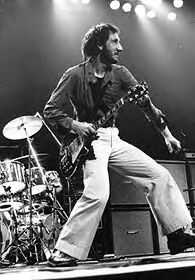
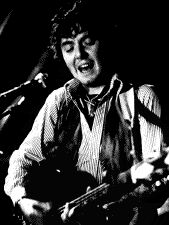
Or perhaps not. By 1977, Townshend's premier band of noisemakers had been together about 13 or so years. A man grows up in that time; grows up and out of a sound oh-so-fueled by the restlessness and anger of adolescence. Townshend had already attempted to deal with that burgeoning maturity in 1975's The Who By Numbers, but he found his efforts marred by his bandmates' presence and the smothering reputation and expectation that came along with The Who's name. Given the chance to finally record without that expectation, of course Townshend would produce an album that sounded completely different to anything he'd recorded before. Whereas The Who is power pop-synthesizer laden-in your face-high concepted-arena rock bombast, Rough Mix is straight ahead, stripped down, country western bar band laid back honest blues. The album is not just bar blues, though, and Townshend remembers his unique pop sensibilities. It's this melding of his power pop instincts to the unlikely partner of country western blues which provides the album its title and theme for the music, as well as its unique sound. To help him in his efforts, it seems Townshend enlisted the aid of The Small Faces' Ronnie Lane. The album alternates between the two artists and is roughly split between the two of them, with Townshend gaining a slightly larger share of the 11 songs. It's obvious from listening to the album that Townshend is the key player and got more out of the collaboration. Lane's tracks, while good, are truly country western,
Townshend sounds like he's having fun on this album. The opening track "My Baby Gives It Away", let you know how it's going to be. It's a rollicking driving song, confident and laid back, shifty and slippery, imminently hummable and danceable with throwaway lyrics. Very reminiscent in spots of The Doors' "L.A. Women". You can just hear this song being played in some blues bar dive somewhere by a too good to be true bar band. The instrumental title track is another number along these lines, mean guitar work provided by no less than Eric Clapton. At other times, the spiritual side of Townshend comes out, but it comes out freely. The soaring "Keep Me Turning" is one of these key moments. The song builds slowly into its yearning chorus, Townshend's tremulous voice betraying volumes of emotion as it supplicates a higher power. Townshend's incisive observations of human nature is also present in the climatic "Street in the City", as the singer sarcastically observes the many pedestrians passing him by on a busy city street. The track is highlighted by the presence of a full orchestra. Now, ordinarily when an orchestra is brought into a rock song, it is almost mere window dressing, used for emphasis and background music to add some kind of weight to the music. Not so with this song; I've never quite heard the use of an orchestra in this manner. It takes over the song and becomes the melody. It doesn't just thunder away, either. It rises and flows and soars and settles; the song reminded me alot at times of Gershwin's "Rhapsody in Blue". All that, and still room for Pete's acoustic guitar and vocals. Ronnie Lane's contributions to the album are also great, if not in the same league as Townshend's. His songs suffer in comparison from their fairly straight-ahead treatment of the folk rock,
The album all comes together on "Heart to Hang Onto". This Townshend written song features both artists contributing vocals, as Lane sings the sad verses, with their images of shattered and beaten people, and Townshend tackles the hope filled yearning chorus. The song features some great moody guitar and organ work, slowly building to a brief but intense explosion of electric guitar jamming, only to subside again into another tortured refrain. It's a great piece, made all the better by these two dissimilar artists contributing their unique talents to achieve a greater whole. The entire album is like this, and it's a forgotten little gem in those massive store CD racks. |
||||||||||||||||||

| - | Captain Briton is protector of Earth 515. He wishes he had a British Accent. |
« back to the front page ·
original URL: mopkin.com/columns/article.cfm?id=66